




Home / Knowledge hub /
Building confidence into complex drug-device programs with early analytical expertise
October 29, 2025
Drug-device programs are under pressure to do more, with tighter timelines, deeper scrutiny and increasing complexity.
As teams move from concept through clinical and commercial phases, one challenge remains constant: ensuring products behave as intended, consistently and safely.
That challenge gets more complicated as formulation, device mechanics, packaging and regulatory expectations converge. Whether developing an inhaler with a next-generation propellant (NGP) or scaling an autoinjector, these interactions must be understood and managed from the start.
That’s where Analytical Services comes in.
Why analytical thinking needs to start early
When analytical testing is viewed as a final checkpoint, issues can often appear too late to fix without delay and cost. This could be a shift in aerodynamic particle size distribution, the emergence of an unknown leachable from a container closure system, or an autoinjector’s extrusion force drifting out of specification after temperature cycling.
Most of these risks can be addressed before they impact timelines, but only if analytical services are integrated from the outset of the project.
By designing studies tailored to a product’s delivery route, formulation and lifecycle phase, teams will be better placed to identify risks before they become problems and generate data that informs real, impactful decisions.
What we test, and why it matters
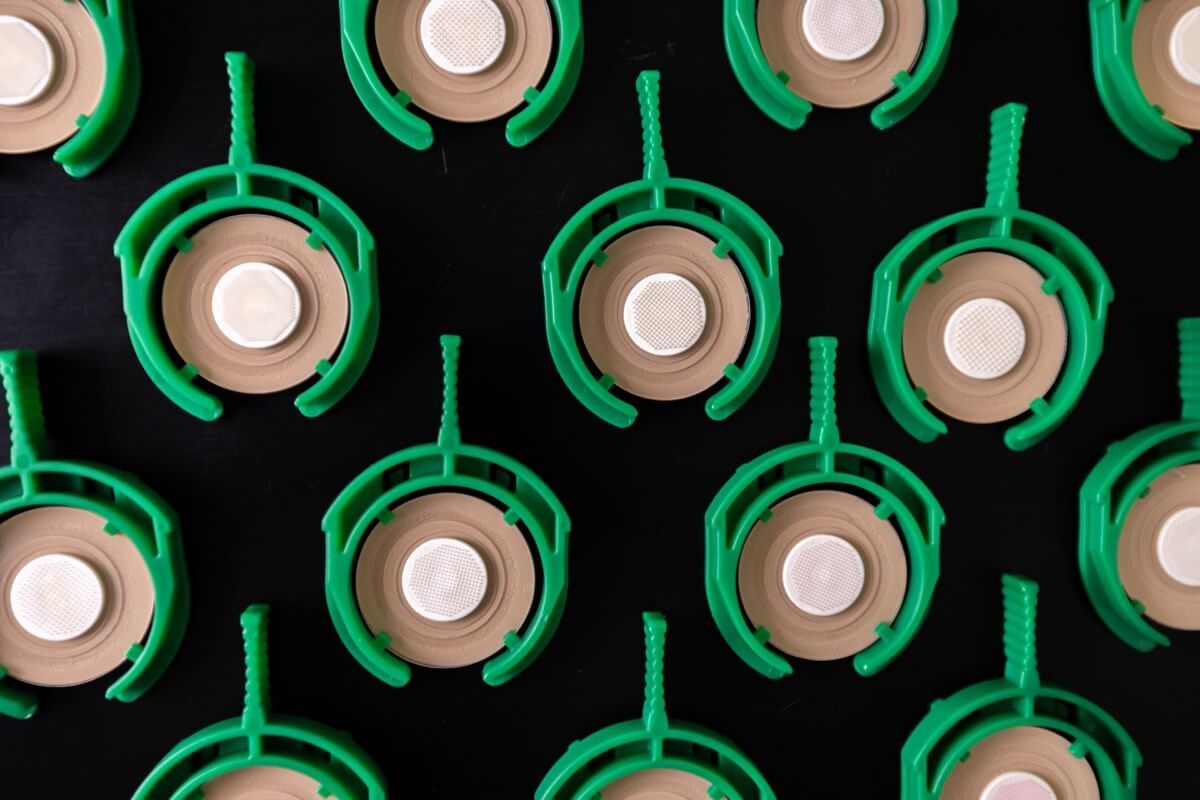
Kindeva’s analytical services cover pulmonary, nasal, injectable and dermal systems, including emerging formats like microneedle array patches, with capabilities built for both traditional and complex delivery formats.
For pulmonary and nasal products, we evaluate formulation-device compatibility, aerodynamic behavior, particle distribution, and in-vitro bioequivalence (IVBE). These studies are especially critical when transitioning to NGPs, where demonstrating consistent performance without full clinical studies can be a regulatory expectation.
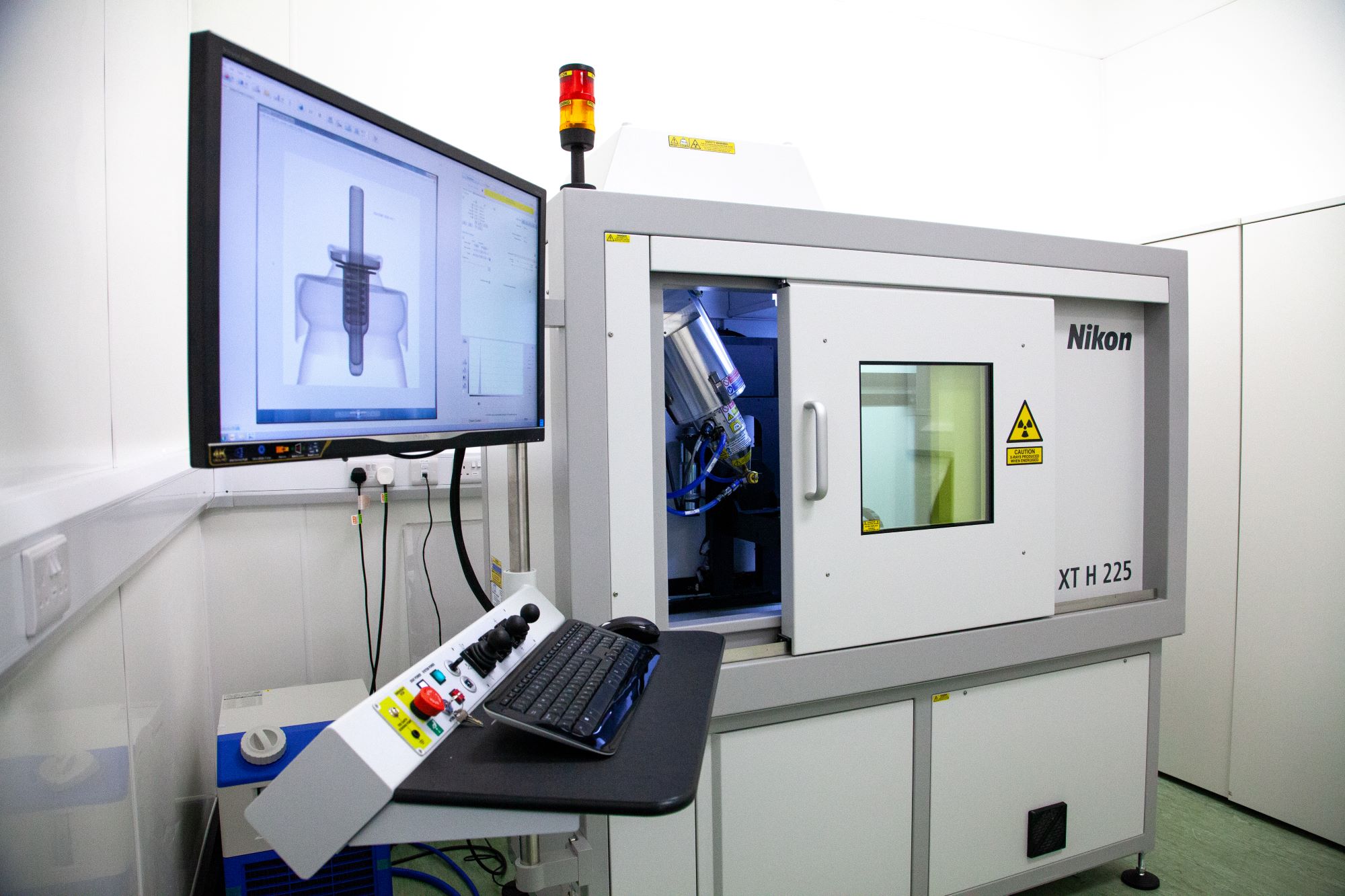
Injectables, including autoinjectors and prefilled syringes, are tested for container closure integrity, extractables and leachables, functional performance (break-loose, glide, safety activation) and impurity profiles.
Dermal systems require a different focus: adhesive performance over time, release rate behavior under various storage conditions and permeation characteristics through skin analogues.
These studies aren’t off-the-shelf; they’re designed in context. For a product in early development, that might mean stress-testing storage conditions. For one approaching commercial scale, it could mean validating a method to detect micro-level degradation over time.
Meeting new development demands
As product categories evolve and regulatory expectations deepen, we’ve adapted our capabilities to meet new development needs across:
In-vitro bioequivalence (IVBE)
When inhalation products must demonstrate therapeutic equivalence, but patient studies are impractical or unnecessary, IVBE becomes a critical path.
These in-vitro methods allow teams to compare drug delivery behavior through dissolution, particle size, and formulation performance against established references.
For pulmonary products, it’s a way to generate meaningful equivalence data without introducing patient variability.
Functional performance testing under real conditions
Functional testing has long been used to verify design intent. However, for validation, especially with rising regulatory expectations, it must reflect actual use.
At Kindeva, device performance testing now occurs in a cGMP environment, using product-filled systems.
That shift enables more accurate simulation of real-world forces (break-loose, extrusion, and deliverable volume), with data that better supports regulatory review and commercial readiness.
Testing for biologic-device combinations
As more large molecule therapies are delivered through device systems, the need for biologics-specific analytics increases. We’ve expanded protein testing capabilities across two sites:
- Our site in Bridgeton, MO, supports QC and batch release.
- Our site in Woodbury, MN, supports validation and stability testing
This setup helps reduce handoffs and maintain analytical consistency from preclinical through market launch.
Computational fluid dynamics (CFD) modeling
Some interactions, such as regional deposition in lungs or fluid flow through an injector, can’t easily be seen or tested physically. That’s where in-silico modeling becomes practical.
Our CFD capabilities simulate spray dynamics, deposition, mixing and pressure-flow characteristics. These tools help engineering teams explore “what if” scenarios, validate design choices or spot risk before it becomes costly.
Trusted testing, tailored to the path ahead
Effective analytical testing isn’t just about the capabilities, but the confidence behind them. That’s why our services are delivered by a team of over 60 scientists with deep, hands-on experience across formulation types, delivery routes and regulatory environments. We’ve developed and validated more than 300 analytical methods, supporting complex programs from early development through commercial readiness.
Our analytical labs in Woodbury, MN are FDA-registered, cGMP-compliant and DEA-licensed. Our analytical labs in Loughborough, UK, are EMA-certified. Both are built to handle complex combination product development from feasibility through to commercial readiness, with environmental cycling chambers, validated stability storage and instrumentation for both compendial and advanced analytics.
We support every major delivery route with specialized analytical expertise in:
- Pulmonary: Deep experience in pMDIs, in-vitro bioequivalence and NGPs
- Nasal: Proven regulatory track record across U.S. and EU markets
- Injectables: Precision testing to support analytical roadmaps for complex drug-device programs
- Dermal: End-to-end support with unique adhesive performance insights and NDA/ANDA experience
Our analytical systems are designed to adapt, ensuring the data you generate moves your product forward, phase by phase.
Your analytical services partner
The value of an analytical partner isn’t just in lab reports, it’s in how those results are interpreted and applied.
At Kindeva, we work as an extension of your development team. Our scientists help flag patterns, troubleshoot anomalies and build method validation strategies aligned with your regulatory path.
When decisions rely on data, the strength of your analytical approach can determine how far and how fast your product can go.
Learn more about our advanced analytical capabilities at: https://www.kindevadd.com/cdmo-services/analytical/
Related resources
Explore our other resources to discover valuable insights on the latest trends in drug delivery.

What’s behind the decisions shaping successful fill finish programs?
Advanced equipment and available cleanroom capacity are important considerations when choosing a sterile fill finish CDMO partner, but they only form part of the decision. As a drug program nears cGMP manufacturing, careful consideration of technical, quality, and operational readiness is essential, as it shapes how confidently a program can progress. These considerations take place […]
Learn More
Building sterile injectable manufacturing capacity for growing GLP-1 demand
Glucagon-like peptide-1 (GLP-1) receptor agonists are being prescribed more frequently, increasing pressure on sterile injectable manufacturing networks. To effectively serve expanding patient populations, developers must increase output while maintaining product quality and regulatory compliance without disrupting the supply of other therapies. Meeting the growing GLP-1 demand requires manufacturing models that can manage high-volume programs alongside […]
Learn More
Meeting the challenges of fill finish manufacturing
How flexible infrastructure and early manufacturing expertise can help drug developers respond to changing demand With rising demand for glucagon-like peptide-1 (GLP-1) medicines, continued progress in biologics and the expansion of self-administered treatments, new expectations are being placed on sterile fill finish operations. Manufacturers must accommodate different container formats and production volumes while maintaining consistent […]
Learn More
Can one quality system manage complexity across multiple drug delivery platforms?
As drug development portfolios expand across multiple delivery platforms, increasing complexity places quality systems under greater strain. For sponsors considering a CDMO, it is essential to know that the Quality Management System (QMS) can provide consistency while allowing teams to respond appropriately to the requirements of each product. A harmonized QMS can provide that framework […]
Learn More
Parenteral precision: Upstream formulation handling before sterile fill finish
Parenteral precision is a blog series exploring the controls, technologies and design decisions that shape modern parenteral manufacturing. Each article looks at one capability through a practical lens: what it is, how it works, who it supports and why it matters. In our first blog, we explored how sterile fill finish operations are designed around […]
Learn More
Delivering tomorrow’s injectables, today
Injectable therapies are entering a new phase of complexity. Biologics, personalized medicines and combination products are increasing demand for delivery systems that must adapt to more diverse formats and patient needs. Expectations around speed and compliance also continue to rise across the development lifecycle, placing greater pressure on how these systems are designed and scaled. […]
Learn More
Green propellants and the future of metered dose inhalers
The transition to next-generation propellants (NGPs) with low global warming potential (GWP) is redefining what success looks like for pressurized metered dose inhalers (MDIs). As sustainability targets tighten, developers must rethink how inhaled therapies are formulated, tested and manufactured without compromising performance. Reformulating with NGPs affects not only the drug product but also its interaction […]
Learn More
Q&A: Navigating tech transfer and production pitfalls
Successful tech transfer alignment requires robust risk management and precise operational planning. When communication gaps or unforeseen supply chain hurdles emerge, project timelines and product quality are often the first to be affected. In this Q&A, we explore the common pitfalls of pharmaceutical tech transfers, including how to protect critical milestones without compromising safety and […]
Learn More
Webinar | Beyond the filling suite: How modular facility design supports sterile manufacturing success
Sterile manufacturing requirements are fast evolving, which means that many organizations are reassessing whether their legacy facilities can support future operational and regulatory demands. In this webinar, John Wichelt, Vice President and General Manager at Kindeva’s Bridgeton site, explores what a modern sterile fill finish facility needs to look like in this new era. Drawing […]
Learn MoreLet’s transform tomorrow together
Every patient deserves a brighter tomorrow. As your strategic partner, we are dedicated to building your lasting legacy and helping you fast-track healthier tomorrows. You dream it, we deliver it.