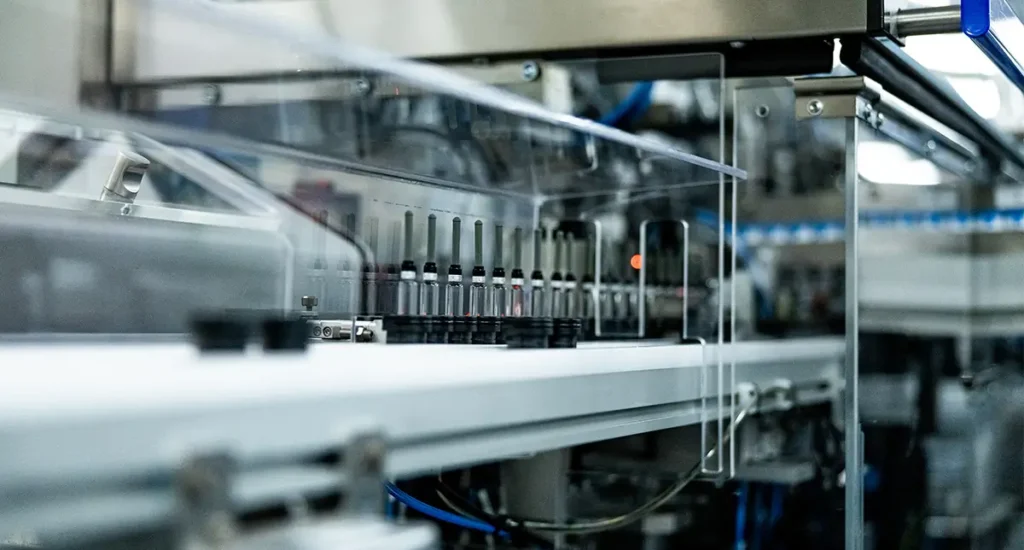
Technology transfer represents a critical bridge between development and commercial manufacturing. This complex process — moving product and process knowledge between development and manufacturing teams or between different manufacturing sites — demands precision at every stage.
The implications of technology transfer extend beyond knowledge sharing. Each decision during this process directly impacts manufacturing efficiency, regulatory compliance, and ultimately, time to market. A well-executed tech transfer can accelerate commercialization timelines, avoiding oversights or missteps that could cascade into significant delays and additional costs.
The Technology Transfer Landscape
The pharmaceutical manufacturing environment continues to evolve, driven by increasing demand for sterile products and an ever-more complex regulatory landscape.1 Recent updates to regulations, including Annex 1, have heightened requirements for manufacturing processes and controls, particularly in sterile manufacturing environments.
Success in this landscape requires careful navigation of multiple phases. The tech transfer journey progresses through new product introduction, engineering and first clinical runs, process performance qualification (PPQ), and finally, commercial manufacturing preparation. Each phase builds upon previous steps, making thorough execution essential for both regulatory approval and commercial viability.
Market pressures add another layer of complexity to this process. As pharmaceutical companies face increasing competition, the drive to reduce time to market intensifies. This acceleration must be balanced against the need for scalable, efficient processes.
By examining common challenges and implementing strategic solutions, companies can build a more efficient path from development to commercial manufacturing. This helps establish a strong foundation for long-term manufacturing success.
Challenge 1: Bridging the R&D-Commercial Manufacturing Gap
Research and development teams often focus on product formulation and early-stage development without fully considering commercial manufacturing requirements. This disconnect manifests in practical challenges that can significantly impact the tech transfer process, frequently necessitating costly reformulations and extending development timelines.
The solution to this challenge is adopting a commercial manufacturing mindset from the earliest stages of development. This approach requires meaningful collaboration between R&D and commercial stakeholders from project initiation. By including manufacturing expertise in early development decisions, teams can better anticipate scaling challenges and design processes that translate effectively to commercial production.
Success also depends on careful material selection and supplier qualification. Organizations must work with suppliers capable of supporting both development and commercial-scale manufacturing, ensuring consistent material quality and availability throughout the product life cycle. This foresight helps prevent supply chain disruptions that could otherwise derail the tech transfer process.
Challenge 2: Managing Documentation
The importance of comprehensive documentation during tech transfer cannot be overstated, yet misalignment in knowledge and documentation transfer remains a persistent challenge. Commonly overlooked documents include cleaning recovery protocols, raw material qualifications, risk assessments, engineering run protocols, and process validation master plans.
A successful documentation strategy requires alignment with industry standards, particularly PDA Technical Report 65.2 By implementing thorough documentation practices from the start, organizations create a clear trail of decision-making and process development that supports both regulatory compliance and operational efficiency.
Challenge 3: Analytical Capabilities
Limited analytical capabilities can create unexpected bottlenecks. When organizations rely heavily on outsourced testing, real-time problem-solving becomes challenging, and timeline extensions often follow. The impact becomes particularly acute during critical phases such as method transfer and validation.
Developing robust in-house analytical capabilities offers a distinct advantage. Organizations with integrated analytical expertise can perform method development, qualification, and compendial verifications efficiently. This capability enables rapid troubleshooting and adjustment during tech transfer, supporting more predictable timelines.
Challenge 4: Navigating Regulatory Requirements
Regulatory requirements present another significant challenge, particularly for complex products and combination devices. Organizations often underestimate the scope of regulatory documentation needed, especially when dealing with products requiring additional submissions such as device master files.
Success requires careful planning and preparation. Manufacturing facilities must maintain current Establishment Inspection Reports (EIRs) and plan for extended stability programs, particularly for biologics which may require up to one year of stability data.3 Additionally, thorough homogeneity testing across batches helps ensure consistent product quality and supports regulatory submissions.
Challenge 5: Adapting to Emerging Trends
The pharmaceutical landscape continues to evolve, presenting new opportunities and challenges for tech transfer. The rise of biosimilars as patents expire, the increasing prevalence of 505(b)(2) submissions,4 and growing demand for innovative autoinjector technologies5 all require flexible and adaptive tech transfer approaches.
Organizations must ensure their capabilities align with current and emerging product and platform requirements. This alignment demands built-in flexibility within tech transfer processes, allowing teams to adapt to new trends while maintaining efficiency and compliance.
Achieving a Smooth Tech Transfer
Successful technology transfer requires a holistic approach that addresses each of these critical challenges. The key lies in preparation and foresight. Organizations that invest in addressing challenges proactively rather than reactively position themselves for success in an increasingly complex environment. This investment not only supports more efficient tech transfer processes but also builds a foundation for sustainable commercial manufacturing success.
Want to explore tech transfer in more detail? Download our white paper.
References
- Panchal, K., Katke, S., Dash, S.K., et al. An expanding horizon of complex injectable products: development and regulatory considerations. Drug Deliv Transl Res. 2023 Feb;13(2):433-472. doi:10.1007/s13346-022-01223-5
- Parenteral Drug Association. PDA Technical Report No.65 Revised 2022 (TR 65) Technology Transfer. 2022 Jun. https://www.pda.org/bookstore/product-detail/6680-tr-65-revised-technology-transfer
- Sangeetha, V.P., Remya, N.S., and Mohanan, P.V. Regulatory issues in biological products. Biomedical Product and Materials Evaluation. Woodhead Publishing. 2022:309-327. doi:10.1016/B978-0-12-823966-7.00005-0
- FDA. Determining Whether to Submit an ANDA or a 505(b)(2) Application. 2019 May. https://www.fda.gov/regulatory-information/search-fda-guidance-documents/determining-whether-submit-anda-or-505b2-application
- Ingle, R.G., and Fang, W.J. Prefilled dual chamber devices (DCDs) – Promising high-quality and convenient drug delivery system. International Journal of Pharmaceutics. 2021 Mar;597:120314. doi:10.1016/j.ipharm.2021.120314
Related resources
Explore our other resources to discover valuable insights on the latest trends in drug delivery.
Navigating the green revolution: Why next-generation propellants are critical for pMDIs
The imperative to address climate change is reshaping industries worldwide, and pharmaceutical manufacturers are no exception. In respiratory medicine, the spotlight has fallen on pressurized metered-dose inhalers (pMDIs). While crucial for millions of patients, pMDIs harness propellants with a global warming potential (GWP) many times higher than CO2. This significant environmental footprint is a critical […]
Learn MoreWhere the propellants are greener: Inside the MDI facility of the future
As the pharmaceutical industry accelerates toward net-zero goals, inhalation therapies face unique scrutiny. Pressurized metered-dose inhalers (pMDIs) remain vital for millions of patients, yet their reliance on legacy propellants presents a sustainability challenge. To address this, Kindeva has established its UK headquarters and MDI Center of Excellence in Loughborough, a facility purpose-built to lead the […]
Learn More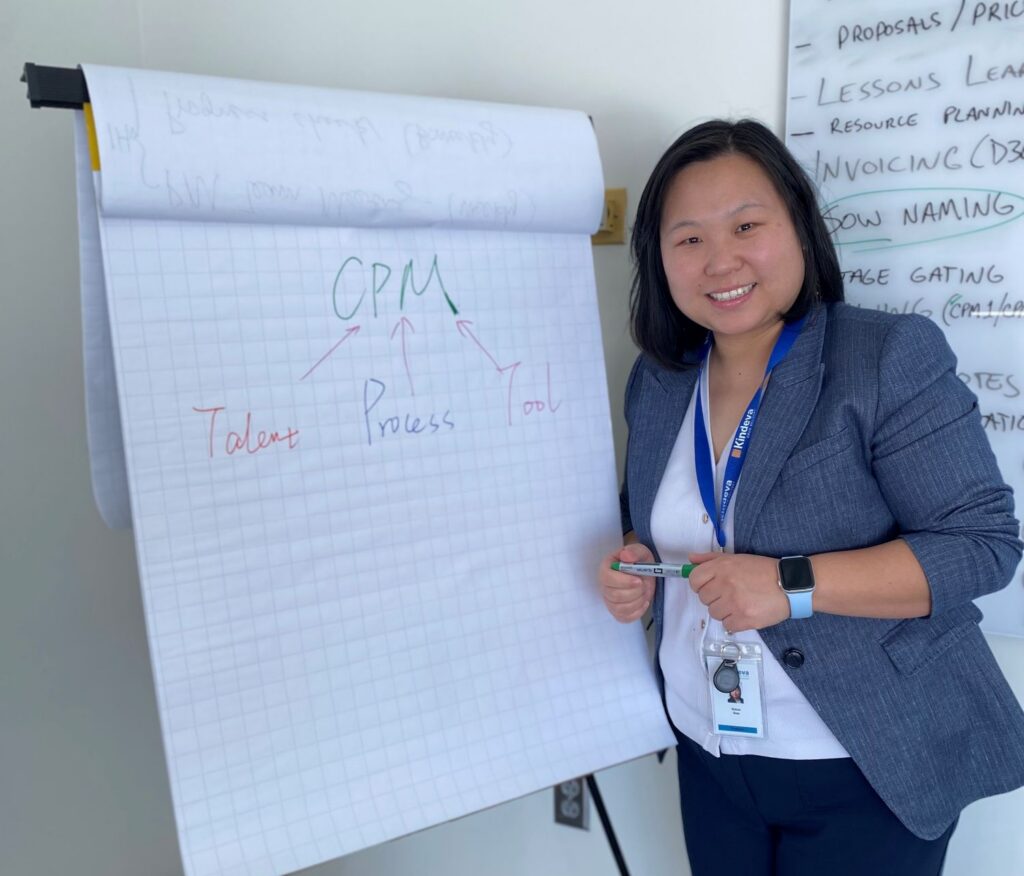
Career journeys blog 4: Grace Guo
In this story, we meet Grace Guo, Manager of Client Portfolio Relationship Management, whose pathway at Kindeva has grown through clear communication, strategic thinking and a strong focus on people.
Learn More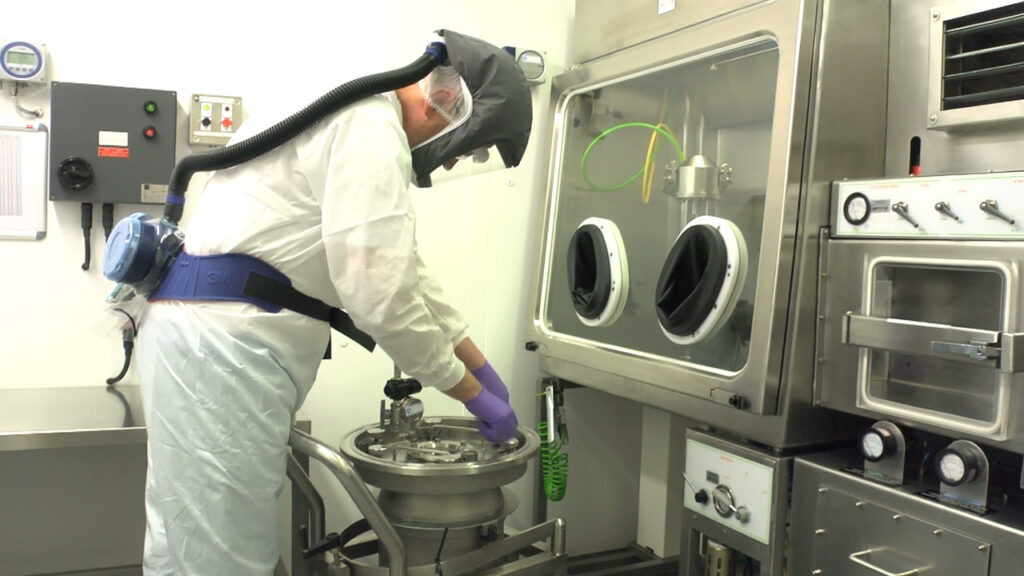
The next leap in skin-based drug delivery: How dermal delivery platforms are transforming tomorrows for patients
Skin-based drug delivery is gaining attention as patients and healthcare systems look for treatments that support at-home administration and remove the need for needle-based injections. As this shift accelerates, developers are investing in technologies that improve usability without compromising performance. These platforms are opening new possibilities for therapies that rely on reliable, patient-preferred delivery. A […]
Learn More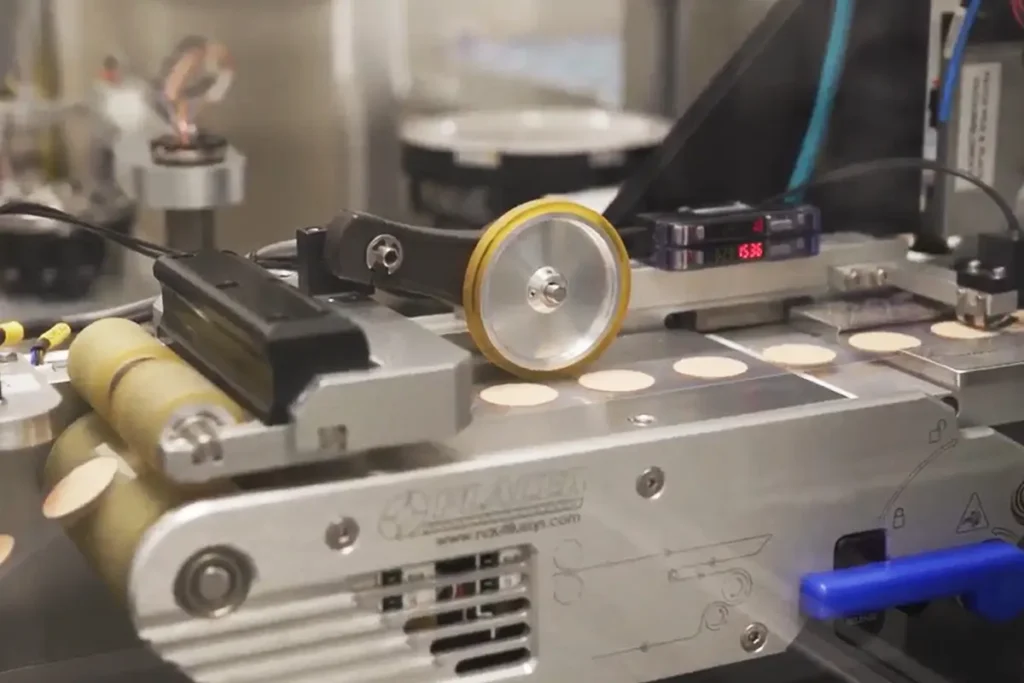
Webinar | A Bridge to the Future of Aseptic Manufacturing: A Pharma 4.0 Case Study
Growing demand for high-quality sterile fill finish capacity is putting pressure on development timelines and supply programs across the industry. As expectations for Annex 1 alignment, agility and data-driven control rise, partners need facilities designed to keep pace with evolving requirements. In this on-demand webinar, Chad Hafer, Director of Technical Operations, Aseptic Fill Finish at […]
Learn More
Career journeys blog 3: Lauren Harrison
In this story, we meet Lauren Harrison, a formulation scientist who began her path as an apprentice and has spent the last decade building a career rooted in curiosity, hands-on learning and collaboration.
Learn More
Navigating the transition to next-generation propellants for pMDIs | On-demand webinar
Regulators, health systems and patients expect meaningful progress on sustainability. For pressurized metered dose inhalers (pMDIs), this means planning the transition to low global warming potential (low-GWP) next-generation propellants (NGPs) now, not at the end of the decade. In this webinar with Pharmaceutical Technology, Craig Somerville, Senior Vice President of Kindeva’s pMDI business unit, shares […]
Learn More
Beyond the contract: Driving transformational partnerships with manufacturing… and more
Achieving scientific breakthroughs is just one hurdle in today’s drug development and manufacturing process aimed at improving patient outcomes. Bringing a new therapy to market requires meticulous execution and clear communication at every step. Unfortunately, even the most groundbreaking scientific advancements can be delayed or even entirely abandoned due to poor performance from partners. This […]
Learn More
Why Kindeva: Analytical and regulatory services
Overcome complex analytical and regulatory challenges with a partner dedicated to your product’s success. Our specialist expertise helps you navigate testing, compliance, and quality to advance your project from concept to commercialization. Download our one-pager for a closer look at our integrated approach, including: An overview of our comprehensive, phase-appropriate analytical services. How our regulatory […]
Learn MoreLet’s transform tomorrow together
Every patient deserves a brighter tomorrow. As your strategic partner, we are dedicated to building your lasting legacy and helping you fast-track healthier tomorrows. You dream it, we deliver it.